2008 Quarter Error Coins: Coin collecting is a pursuit that blends history, artistry, and financial opportunity. While most quarters minted in 2008 are common and circulate at face value, certain error varieties have become highly sought after by collectors. These rare coins can command prices far beyond their original denomination, making them hidden treasures for those who know what to look for.
The State Quarter Program and 2008 Issues
The year 2008 was part of the celebrated 50 State Quarters Program, which ran from 1999 to 2008. Each quarter featured a design representing a U.S. state, with the final releases honoring Oklahoma, New Mexico, Arizona, Alaska, and Hawaii. These coins were struck in massive numbers, but minting errors and special varieties have made some examples far more valuable than others.
Why Error Coins Are Valuable
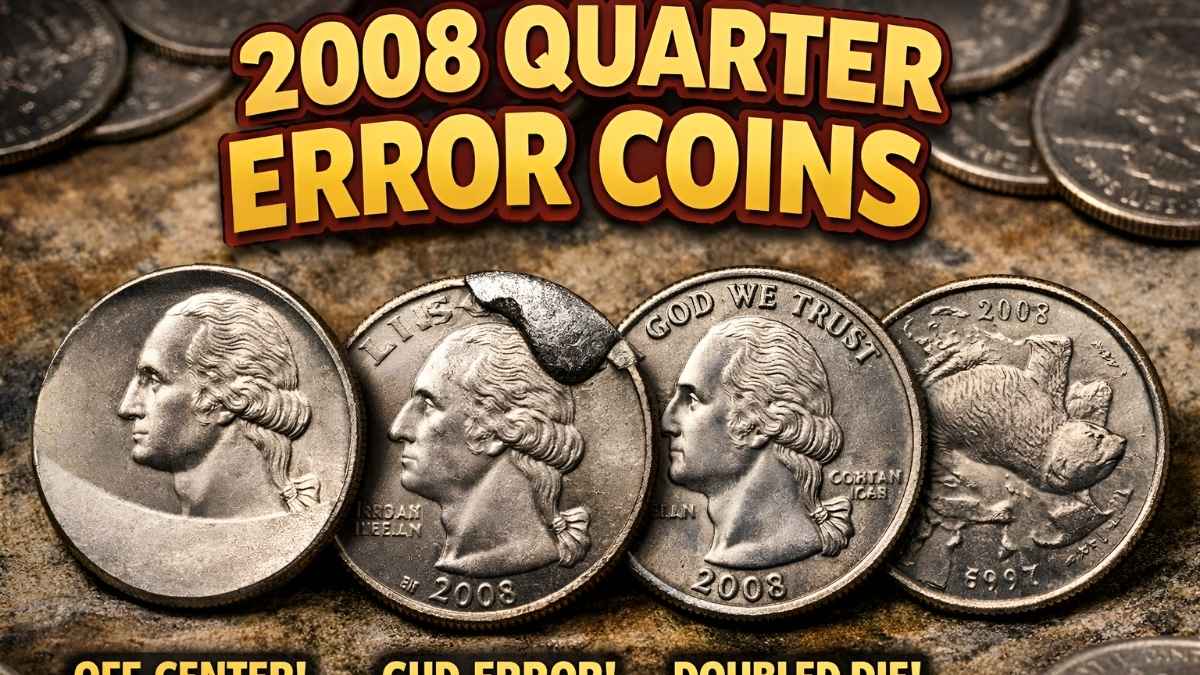
Error coins are prized because they represent anomalies in the minting process. Collectors value them for their rarity and uniqueness. Common types of errors include:
- Doubled die obverse or reverse.
- Off center strikes.
- Wrong planchet errors.
- Clipped planchets.
- Overstrikes or misaligned dies.
Notable 2008 Quarter Errors
Several error varieties from 2008 stand out for their rarity and collector appeal:
- 2008 Arizona Quarter Extra Cactus Error: A die break created the appearance of an extra cactus covering part of the designer’s initials. This variety is popular among collectors.
- 2008 Alaska Quarter Missing Designer Initials: Some coins were struck without the initials of the designer, making them rare and valuable.
- 2008 Hawaii Quarter Off Center Strike: Off center strikes are visually distinctive and can command strong premiums depending on the degree of misalignment.
- 2008 New Mexico Quarter Wrong Planchet Error: A few coins were mistakenly struck on planchets intended for other denominations, creating extreme rarity.
Market Prices Explained
The value of 2008 quarter error coins varies widely depending on type and condition:
- Common circulation strikes: Worth face value.
- Minor errors: Typically sell for 10 to 50 dollars.
- Major doubled dies or off center strikes: Can range from 100 to several hundred dollars.
- Wrong planchet errors: Extremely rare, sometimes worth thousands depending on grade.
- High grade certified examples: Coins graded MS 67 or higher by professional services can command significant premiums.
The Role of Condition and Grading
Professional grading services such as PCGS and NGC play a crucial role in determining coin values. Coins certified at Mint State levels are far more valuable than raw examples. Market prices increase exponentially with higher grades, especially for rare error varieties.
Collecting Strategies
For those interested in 2008 quarter errors, consider these approaches:
- Search coin rolls and collections for anomalies.
- Focus on Arizona and Alaska quarters, which are known for notable errors.
- Prioritize coins graded by professional services to ensure authenticity.
- Explore proof sets from 2008, which may contain rare varieties.
Investment Potential
2008 quarter error coins offer both numismatic and financial appeal. While most examples are common, rare varieties can appreciate significantly over time. The combination of rarity, condition, and collector demand makes them a unique investment opportunity.
Cultural Significance
Beyond their monetary value, 2008 quarters hold cultural meaning as part of the State Quarters Program. They symbolize the diversity and heritage of the United States, while error varieties add an element of intrigue and uniqueness to the series.
Conclusion
2008 quarter error coins represent a fascinating intersection of history, artistry, and financial opportunity. From the Arizona extra cactus variety to rare wrong planchet errors, these coins can be worth far more than face value. For collectors, the pursuit of these treasures is both financially rewarding and historically enriching. The next time you examine your pocket change, take a closer look—you might discover a rare 2008 quarter error that connects you to America’s numismatic legacy while offering unexpected value in the present.