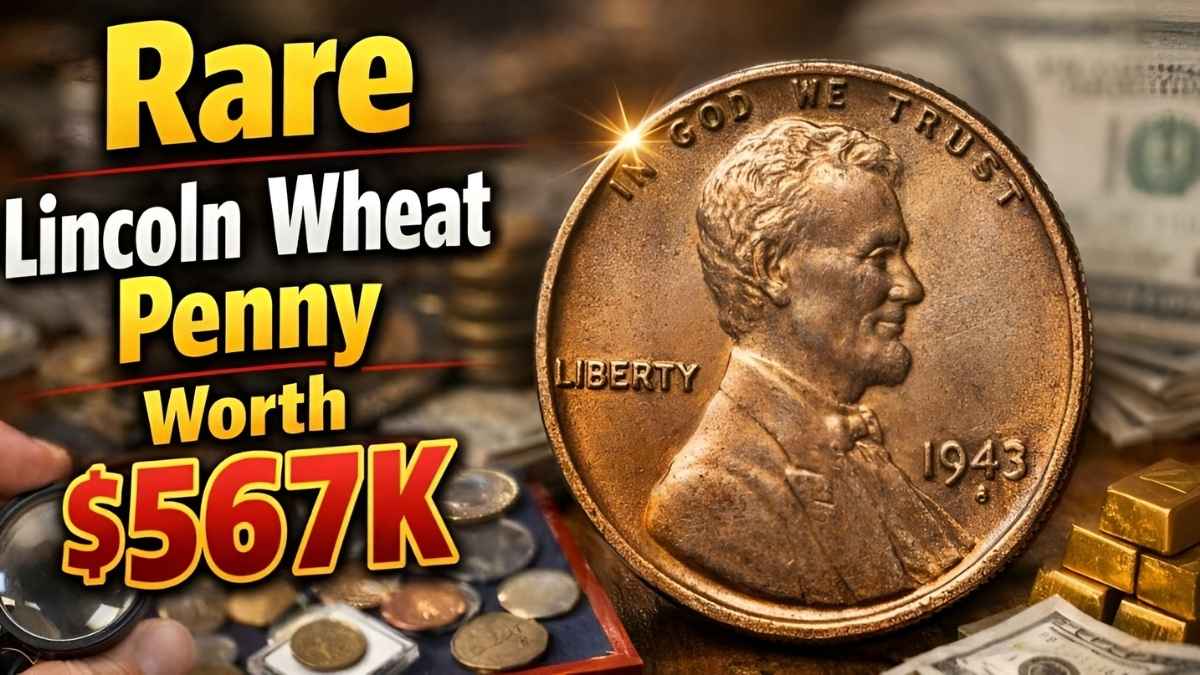
Lincoln Wheat Penny Value 2026: The Lincoln Wheat penny remains one of the most beloved coins in American numismatics. First minted in 1909 to honor President Abraham Lincoln, it has become a cornerstone of coin collecting. In 2026, collectors continue to pursue these coins, not only for their historical significance but also for the rare varieties that can command extraordinary values. Among them, certain rare Wheat pennies have been reported to reach valuations as high as $567,000, making them legendary treasures in the numismatic world.
Historical Background
The Wheat penny was produced from 1909 until 1958. Its reverse design featured two wheat stalks, symbolizing prosperity and agriculture. Over the decades, billions were minted, but scarcity arises from specific years, mint marks, and error coins. These factors make some Wheat pennies far more valuable than others.
Mint Marks and Varieties
Mint marks are critical in determining value. They indicate where the coin was struck:
- No Mint Mark (Philadelphia): The most common variety.
- D (Denver): Scarcer in certain years.
- S (San Francisco): Often more desirable in higher grades.
Key rarities include the 1909‑S VDB, the 1914‑D, and the 1922 No D, each commanding thousands of dollars. Error coins, such as doubled dies, also attract significant premiums.
Value Chart (2026 Estimates)
While most Wheat pennies are worth between a few cents and a few dollars, rare examples can reach staggering values.
| Variety | Circulated Value | Uncirculated Value |
|---|---|---|
| 1909‑S VDB | $700–$2,000 | $5,000–$20,000 |
| 1914‑D | $300–$2,500 | $10,000–$25,000 |
| 1922 No D | $500–$3,000 | $15,000–$30,000 |
| 1943 Copper Penny | $100,000+ | $250,000–$567,000 |
The 1943 copper penny is the most famous rarity, created when a few copper planchets were mistakenly used instead of steel. These coins are among the most valuable Lincoln Wheat pennies ever discovered.
Collector Insights
- Condition Matters: Coins in Mint State grades are exponentially more valuable than circulated examples.
- Authentication is Essential: Professional grading by PCGS or NGC ensures legitimacy and maximizes value.
- Error Coins are Treasures: Doubled dies, off‑center strikes, and wrong planchet errors are highly prized.
- Complete Sets: Many collectors aim to build full sets by year and mint mark, which can be both rewarding and valuable.
Collector Trends in 2026
Numismatics continues to thrive as both a hobby and an investment. Online auctions and marketplaces have made rare coins more accessible, while grading services provide transparency and trust. Younger collectors are entering the field, drawn by stories of extraordinary finds like the 1943 copper penny. Meanwhile, seasoned numismatists continue to focus on high‑grade rarities and complete sets.
Investment Potential
Rare Wheat pennies, especially those tied to minting errors or low mintages, have shown consistent appreciation in value. While most coins remain affordable, the rarest examples are seen as long‑term investments. Their scarcity ensures demand, and their historical significance adds cultural weight to their financial value.

Conclusion
The Lincoln Wheat penny is more than just a coin. It is a piece of American history, a collectible that bridges generations, and in rare cases, a treasure worth hundreds of thousands of dollars. In 2026, collectors continue to celebrate its legacy, with rarities like the 1943 copper penny reaching legendary values of up to $567,000. For enthusiasts, the Wheat penny represents the thrill of discovery, the joy of preservation, and the enduring fascination of numismatics.